

Next.js Starter
Next.js is a minimalistic framework for server-rendered React applications.
This guide will help you create a starter website built on top of Next.js with minimal steps. It uses Contentstack’s Node.js SDK to store and deliver the website content from Contentstack.
Server Side Rendering (SSR) generates website pages at runtime on the server. With SSR, users are served the latest content on their websites.
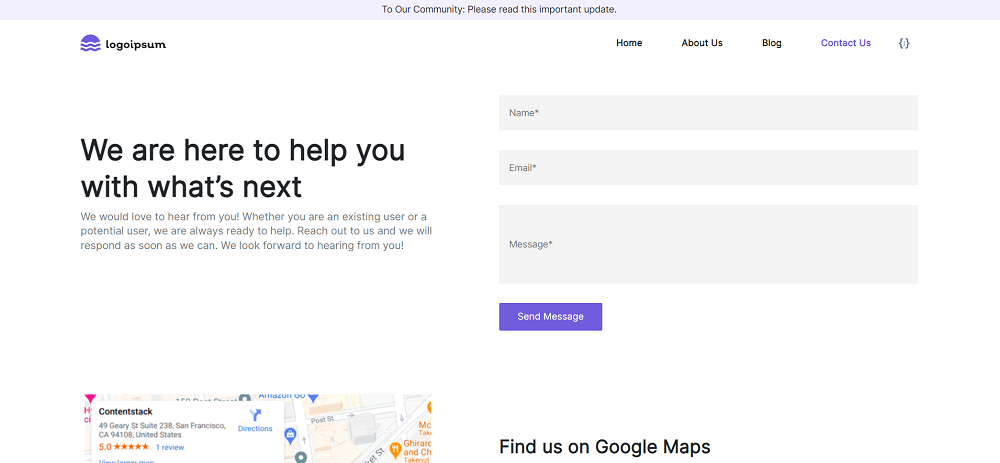
Screenshots
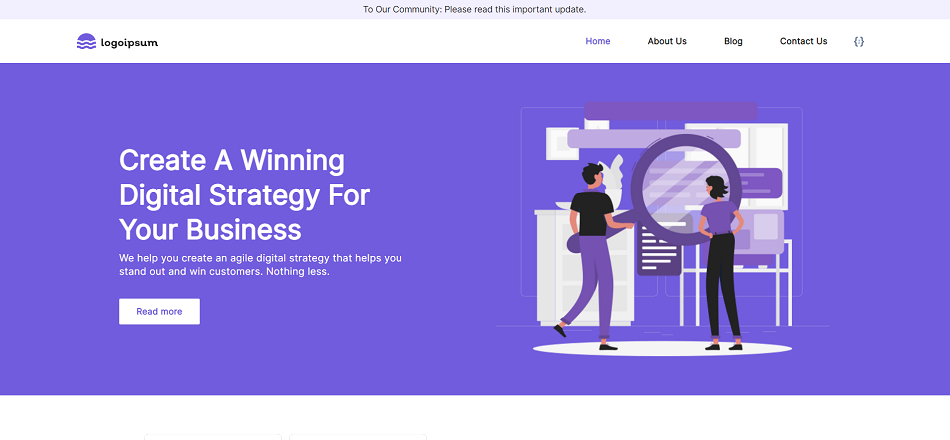
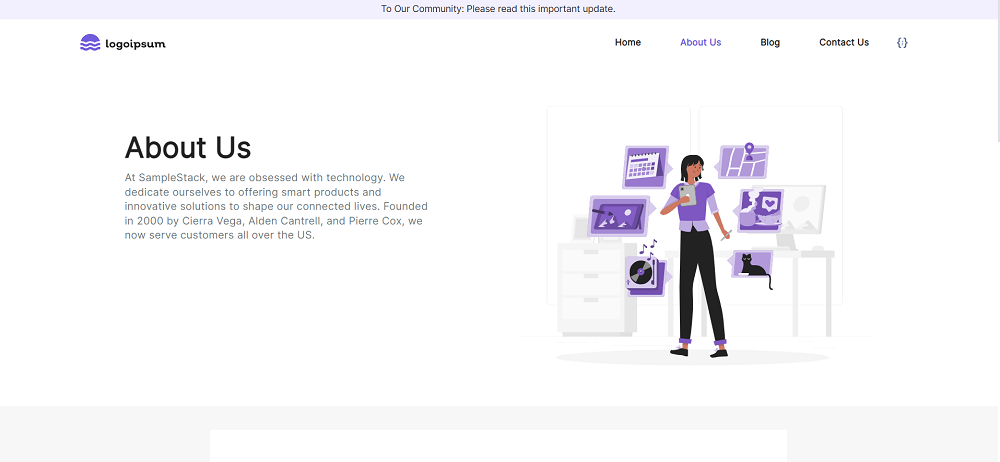
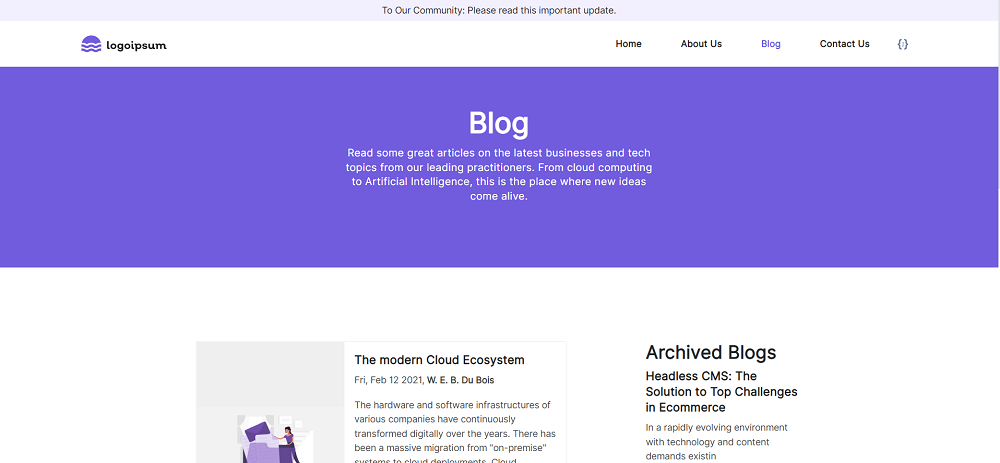
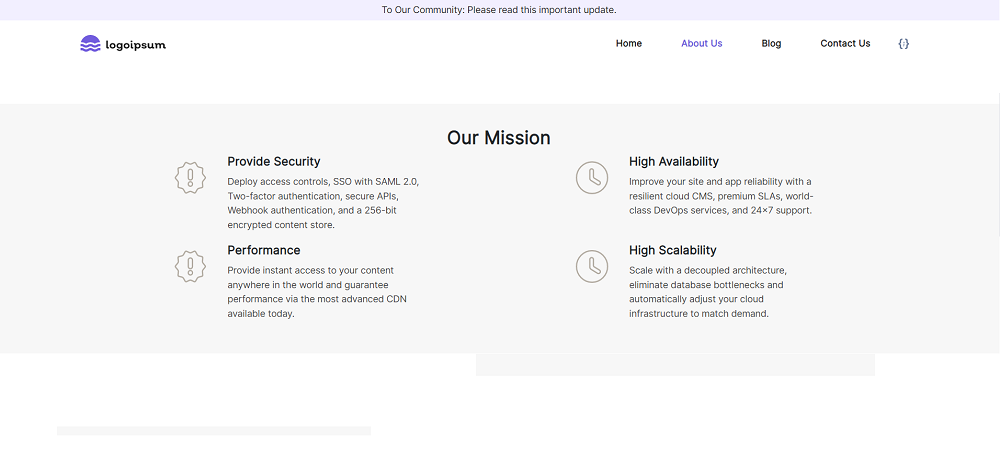
Note: Learn how to create a starter website with the Next.js framework for React applications with Static Site Generation (SSG).
Let’s look at the steps to create this starter website using Next.js and Contentstack.
Note: This starter app uses Live Preview version 2.0.
Prerequisites
- Contentstack account
- Node.js version 20 or later
- Contentstack CLI: npm install -g @contentstack/cli
- Enable Live Preview for your organization
- Management token with read permission
Note: For this tutorial, you must be familiar with Contentstack, Next.js, and Bootstrap Stater Apps using CLI. To learn more, refer to the Contentstack, Next.js docs and Bootstrap Stater Apps using CLI documentation.
Supported Features
- Launch Hosting: Seamlessly deploy your website using our Launch hosting platform. Refer to the Launch documentation to learn more about hosting on Launch.
- Live Preview: Utilize Contentstack's Live Preview feature to see real-time updates of your content changes reflected on your site before publishing.
- Branches: Leverage the Branches feature to manage different versions of your content within Contentstack, allowing for organized development and deployment.
- Workflows: Implement structured content approval processes within Contentstack using the Workflows feature to streamline the content creation and publishing for your site.
Set Up Your App Using Marketplace
To import this starter, log in to your Contentstack account and follow the steps below:
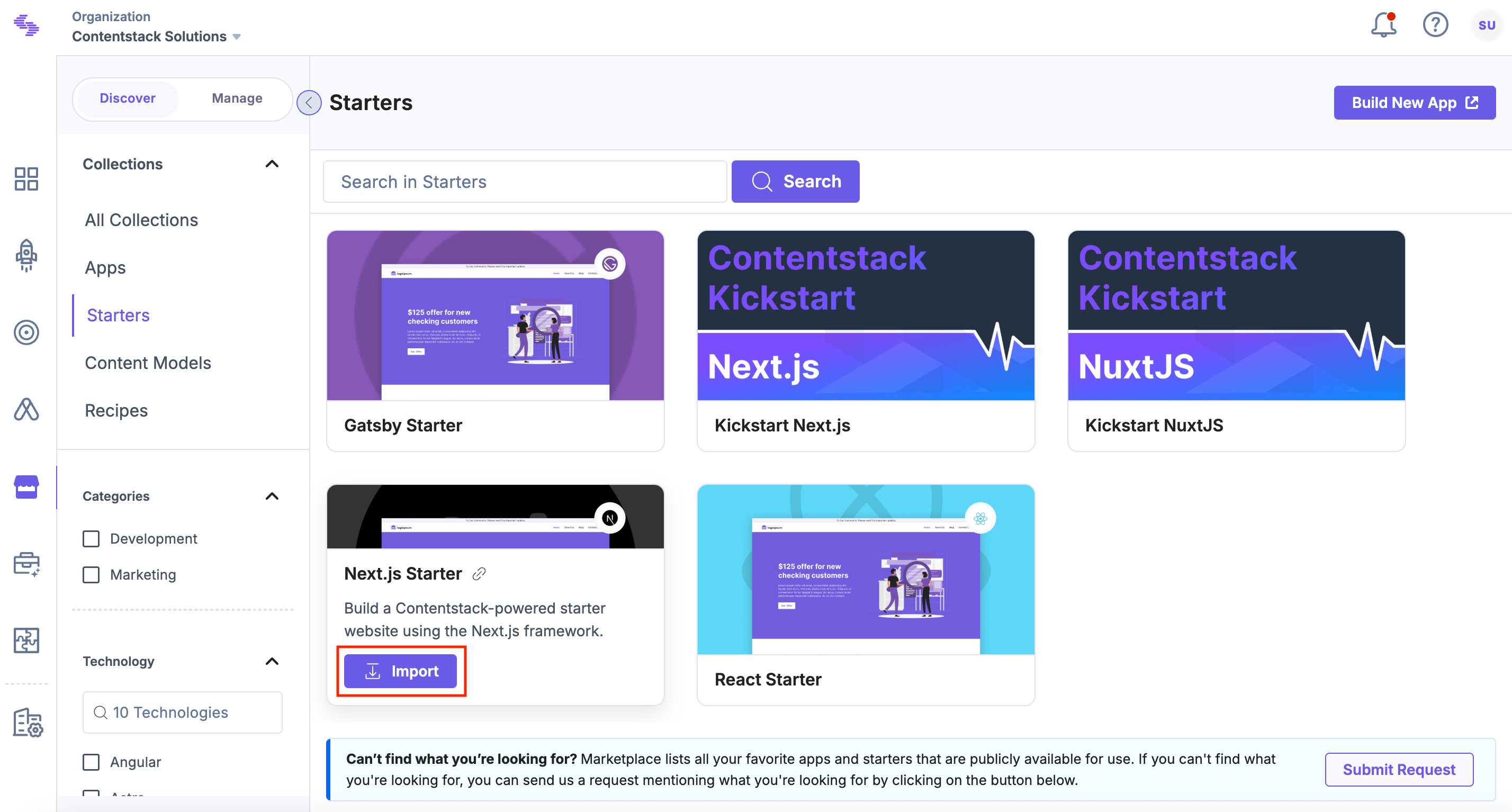
- Navigate to Marketplace from the left-hand side primary navigation, and click Starters.
- You can see the available starters. Hover over the Next.js starter and click Import.
Additional Resource: For more details, refer to the Importing a Starter documentation.
Set Up Your App Using CLI
Here is an overview of the steps involved in creating our Next.js app:
- Set the Region
- Log in to your Account
- Import Content
- Create Delivery Token
- Build and Configure the Website
- Deploy the Website
-
Set the Region
To specify your region (AWS North America, AWS Europe, AWS Australia, Azure North America, Azure Europe, Google North America, or Google Europe), run the following command in your terminal (command prompt):
csdx config:set:region <<region>>Note:- AWS North America: Set the region as AWS-NA.
- AWS Europe: Set the region as AWS-EU.
- AWS Australia: Set the region as AWS-AU.
- Azure North America: Set the region as AZURE-NA.
- Azure Europe: Set the region as AZURE-EU.
- Google Cloud Platform North America: Set the region as GCP-NA.
- Google Cloud Platform Europe: Set the region as GCP-EU.
-
Log in to your Account
To import the prebuilt content to your stack, you need to log in to your Contentstack account via CLI by running the following command in your terminal:
csdx auth:loginThis command requests you to provide your Contentstack’s account credentials (email and password).
-
Import Content
The seed command lets you import content to your stack in a few steps. To do so, run the following command in your terminal:
csdx cm:stacks:seed --repo "contentstack/stack-starter-app"This command prompts the following options:
- Organization name: You will see a list of organizations you have access to. Select the one that contains your source stack, or where you want to create a new stack.
Note: Select an organization where you have Owner or Admin permissions.
- Stack preference: Next, you will get an option to create a new stack or use an existing one:
- If you select New, you must enter the stack name, and the stack creation process will start.
- If you select Existing, you will see a list of stacks you have access to in the organization. Choose the destination stack where you want to import the content. If the existing stack has some content, it will ask for a confirmation to continue with the same stack.
Additional Resource: Refer to the Stack Roles documentation to learn more about permissions.
Tip: To avoid the chances of any error, we recommend that you select the option of creating a new destination stack. If you import content to an existing stack, ensure that the stack is empty.
Finally, you will get the content imported to your stack.
- Organization name: You will see a list of organizations you have access to. Select the one that contains your source stack, or where you want to create a new stack.
-
Create Delivery Token
Delivery tokens are used to fetch published content from a specific environment.
You can create a delivery token for the development environment for running the website on localhost. Later, while deploying your site, you can create tokens for other environments.
-
Build and Configure the Website
Fire up your terminal, navigate to your project folder, and run the following command to create a configuration file named .env.local.
cp .env.local.sample .env.localNote: If you are a Windows user, replace cp with copy in the command given above.
The .env.local file contains all the necessary config parameters. Open it in any code editor or IDE of your choice, provide your stack credentials as shown below, and save the file.
CONTENTSTACK_API_KEY = <api_key_of_your_stack>
CONTENTSTACK_DELIVERY_TOKEN = <delivery_token_of_the_environment>
CONTENTSTACK_ENVIRONMENT = <environment_name>

# By default branch=main, if a branch is not provided
# CONTENTSTACK_BRANCH = <your_branch_name>

# By default region=us, if a region is not provided
# CONTENTSTACK_REGION = <your_region_name>
Mandatory configuration parameters to enable Live Preview
Note: The below code is for AWS North America region users only. Refer the configuration code for AWS-Europe region, Azure North America region, Azure Europe region, Google North America, and Google Europe region on the regions configuration page.
CONTENTSTACK_PREVIEW_TOKEN = <preview_token_linked_with_delivery_token> CONTENTSTACK_PREVIEW_HOST = rest-preview.contentstack.com CONTENTSTACK_APP_HOST = app.contentstack.com CONTENTSTACK_API_HOST = api.contentstack.io CONTENTSTACK_LIVE_PREVIEW = true #By default the live preview feature is enabled for this project. To disable it, set "CONTENTSTACK_LIVE_PREVIEW= false". CONTENTSTACK_LIVE_EDIT_TAGS = false #By default live editing tags are disabled for this project. To enable it, set “CONTENTSTACK_LIVE_EDIT_TAGS= true”.Note: Make sure your management token has READ permission only.
Additional Resource: Go to our Live Preview documentation to learn more about the Live Preview feature in Contentstack.
Run the following commands in your terminal:
npm install
npm run dev
That’s it!
You can now view the website at http://localhost:3000. And you also have the stack that has all the content and resources for the website. Try experimenting by creating new entries and publishing on the “development” environment. You should be able to see the changes on the website at the localhost.
Set up Live Preview (Optional)
Note: In order to use Live Preview, your plan must include this feature. Check our pricing page for more details.
The next step is to set up and enable live preview for your website. Follow the steps below to set up live preview feature for your website:
- Navigate to the Live Preview section in your stack's “Settings”.
- Select the Enable Live Preview checkbox.
- Now, select a Default Preview Environment for previewing the live content of your website. Finally, Save your settings.
This completes your live preview set up. Now, you can deploy the website using Vercel.
-
Deploy the Website
The easiest way to deploy a Next.js starter website to production is by using Contentstack Launch, Contentstack’s web hosting platform. For more details, refer to the Contentstack Launch documentation.
Alternatively, you can use Vercel to host your website. To do so, you need a Vercel account before deploying.Note: When deploying the starter website, enable or disable the Live Preview environment variable as needed.
