

About Publish Rules
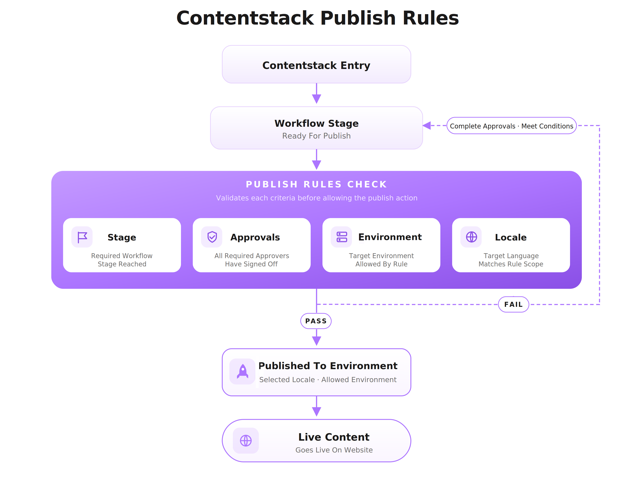
Publish Rules let you define specific conditions for when and how content is published or unpublished. They help ensure that every publishing action, across branches, environments, and locales, follows a controlled review process. This prevents unapproved or premature releases and maintains accountability across teams.
A publish rule consists of two key components:
- Parameters: Specify where and how the rule applies, including branches, environments, content types, locales, and whether the action is publish or unpublish.
- Conditions: Define what must happen before publishing, such as approval by certain users or reaching a specific workflow stage.
By combining these elements, teams can maintain consistency, compliance, and oversight across multilingual or enterprise-scale content operations.
Note: Publish Rules are available only if included in your plan. Only the Stack Owner, Administrator, and Developer roles can create or manage publish rules.
Key Features
Publish rules provide granular control over publishing workflows, enabling organizations to manage risk and maintain publishing standards.
- Conditional Publishing: Set approval and workflow requirements that must be met before content can be published or unpublished.
- Role and User-Based Approvals: Specify approvers by user or role to ensure that publishing actions are verified by authorized reviewers.
- Prevent Self-Approval: Enable this option to prevent the user who last edited an entry from approving or publishing it. This ensures that at least two distinct users participate in every publishing decision, reinforcing accountability and compliance.
- Workflow Stage Enforcement: Define a workflow stage (e.g., “Legal Approved” or “Ready for Production”) that an entry must reach before it can be published. This ensures that content follows all review steps before going live.
- Branch and Environment-Specific Rules: Apply rules to specific branches and environments for precise control over where publishing actions are permitted.
- Multilingual Publishing Control: Define rules that apply to specific locales or all supported languages, ensuring localization happens only after proper approval.
Example Use Case: Enterprise Marketing Launch
A global retail brand publishes seasonal campaign pages in multiple languages. To prevent accidental live publications and ensure legal compliance, the organization defines publishing rules with the following configuration:
Parameters: Apply the rule to the “main” branch, “production” environment, “campaign” content type, “publish” action, and all supported locales.
Conditions:
- Approvers: Regional legal team and marketing director.
- Stage: Content must reach the “Legal Approved” stage in the workflow.
- Prevent self-approval: Enabled.
This configuration ensures that the user who made the last edit cannot publish or approve the campaign. The content can only be published once all required approvers have validated it and it has reached the correct workflow stage, maintaining compliance and content integrity across all locales.
Rule Enforcement on Content Revisions
Once a version of an entry meets all required conditions and is published, the same rule is not reapplied to that version if it’s later republished to another locale or environment.
However, if the entry or its assets are updated, creating a new version, the rule is enforced again. This ensures that each updated version goes through fresh review and approval before publishing.
For example, after a campaign is approved and published to Production, it can be published to another locale without triggering another review. If the campaign content is updated, however, the new version must again meet the approval and workflow stage requirements before publishing.
